Showing posts with label Cotswold Walk. Show all posts

Saturday, 7 March 2015

Monday, 16 February 2015

Cotswold Country Houses: History and Grandeur along the Trail

Scattered through the Cotswolds are fine country mansions, manor houses and there is even a palace. Our network of public footpaths, which date from ancient times, often pass very close to them and here are some of the historic houses next to our routes.


Chastleton House from the churchyard, Oxfordshire Cotswolds
Chastleton House

Chastleton House is a Jacobean country house built between 1607 and 1612.  It was built by Walter Jones, a wealthy lawyer and wool merchant, with no expense spared.  But the family were Royalists during the English Civil War (1642-1651) and in the 18th century they supported the Jacobite cause, which aimed to restore a Stuart king to the throne removing the Hanoverian dynasty.  As a result the family was heavily fined for its political views.  Subsequently, their fortunes did not improve and when the National Trust took the house over in 1991, the interior was much the same as it had been in the 1612.  It remains so today, as the National Trust have done only essential repairs, thus retaining the unique 17th century atmosphere.

Our guided and self-guided day walk, ‘Adlestrop: Where for a moment a blackbird sang’ passes Chastleton House, and the house is open to the public on Wednesday to Sunday afternoon from early March to the end of October.

Blenheim Palace, Woodstock, Oxfordshire, in the Oxfordshire Cotswolds
Blenheim Palace

Blenheim Palace is the sumptuous home of the Dukes of Malborough.  The estate together with funds to build the palace were given to John Churchill, 1st Duke of Malborough, by Queen Anne and parliament, who were grateful for his victory over Louis XIV of France on 13 August 1704 at the Battle of Blenheim.  John Churchill went on to win other battles in the War of Spanish Succession (1701-1714) and the palace is a memorial to him and his military victories.
  
Set in a country estate, the view of the house and lake was described by Randolph Churchill as ‘The finest view in England’ to his future wife on her first visit.   Their son, Sir Winston Churchill(1864-1965) was born there and he is buried in the churchyard at Bladon, next to the estate.

We can arrange a short break of walks in and around Woodstock and Blenheim Palace. Walkers along Shakespeare’s Way and the Oxfordshire Way pass through the estate getting magnificent views of the lake and palace beyond.  The palace is open daily from mid-February to mid-December.

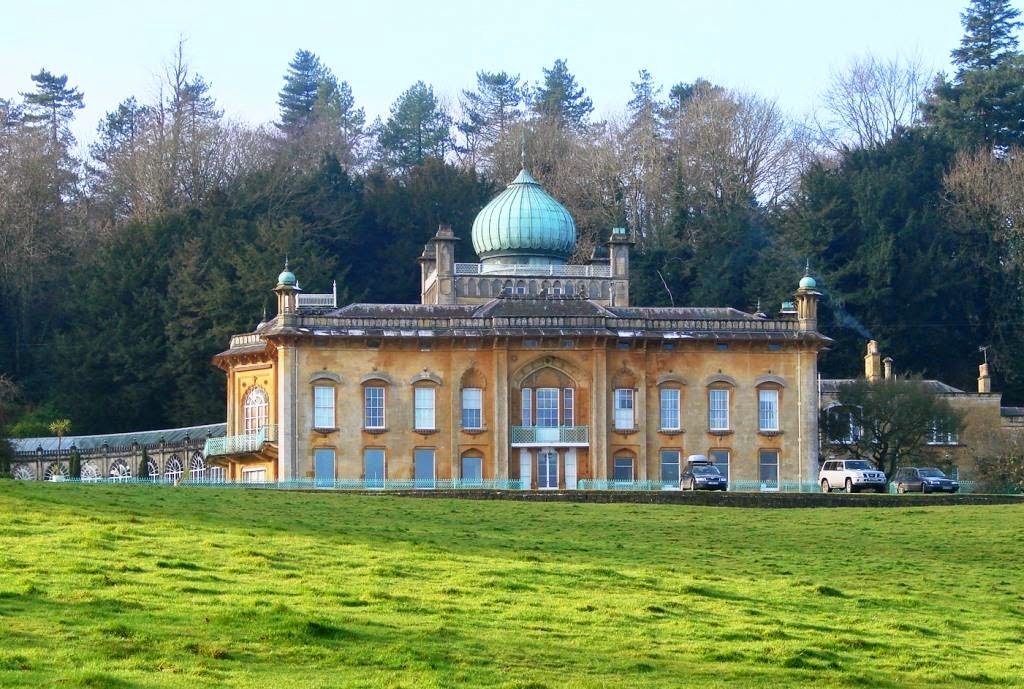
Sezincote House, near Moreton-in-the-Marsh, Cotswolds
Sezincote House

Sezincote House, which lies on the spring line at the eastern side of the North Cotswolds, was designed in the “Indian Style”, by the architect, Samuel Pepys Cockerell in 1805.  The gardens were designed by Humphrey Repton, the eminent horticulturalist who is considered the last of the great British landscape gardeners.  When the Prince Regent visited the house in 1807 he admired the unique combination of Hindu and Muslim architecture, and it is said that it influenced the design of his exotic oriental retreat, the Brighton Pavilion.

Our ‘Classic Cotswold tour passes Sezincote on the routes from Moreton-in-Marsh and Chipping Campden to Stow-on-the-Wold.

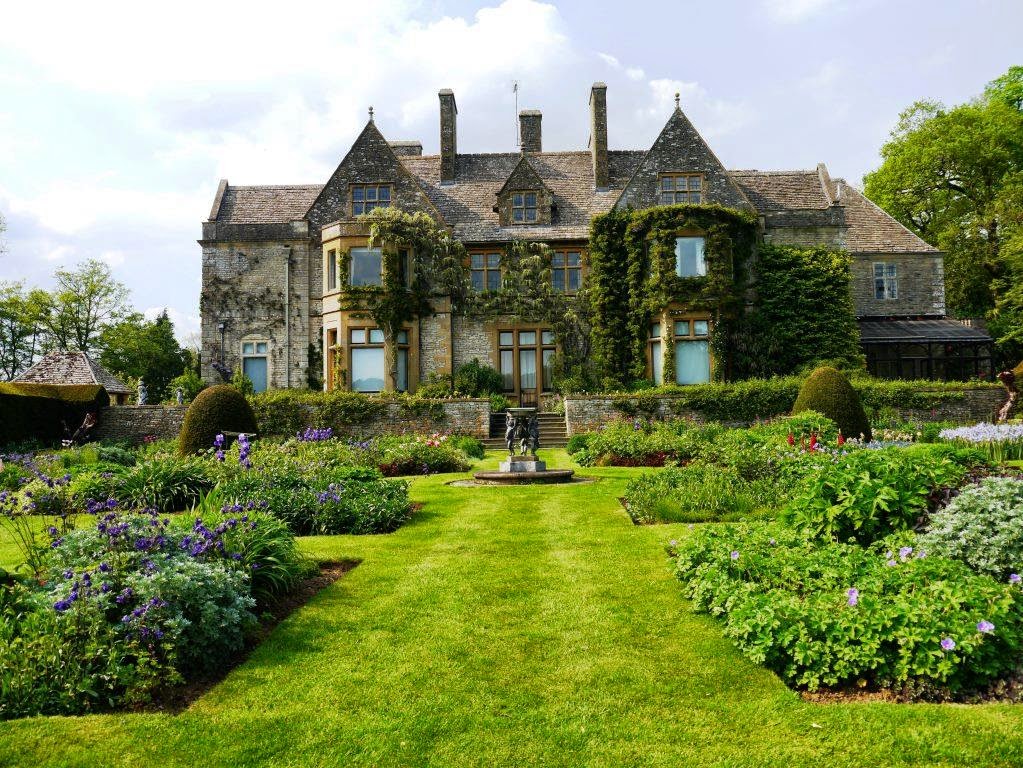
Abbotswood house and garden, Stow-on-the-Wold, north Cotswolds
Abbotswood House

Abbotswood is a lovely country house near Stow-on-the-Wold.  The estate dates back to 1253, but the current house was built in 1867.   Shortly afterwards it was remodelled and enlarged in 1902 by Edwin Lutyens, the eminent British architect who adapted traditional designs for modern day living.  Lutyens also designed the stunning gardens and these are open to the public in April when the rhododendrons in bloom and in October when the acers are in full autumn colour and at other times of the year – this photo was taken in mid-summer.  For people with deep pockets, the house together with the estate and 13 cottages was recently on the market for £30 million.

On our shortbreak based in Stow-on-the-Wold one of the walks passes through the estate.

Please contact Anne, to find out more or to book a walking holiday.

Happy hiking

Anne

Walk the Landscape

Wednesday, 2 April 2014

Cotswold Way Landmarks: Broadway Tower

The Cotswold Way Walking Holiday 

enjoy superb rolling countryside with stunning views, 

pretty towns and villages and historic sites


Costswold Way Landmarks: Broadway Tower
Broadway Tower
This folly in the style of a Norman Keep was built by the Earl of Coventry for his wife on their Springhill Estate between 1797 and 1800.  It is in a prominent position with views over 16 of the original English counties and it can be seen from the family seat in Worcester. The Earl's wife took great trouble to find the most suitable location.   Before it was built she had a flaming beacon lit at the site, then drove around the surrounding area making sure that it could be seen.  
The hill was previously called the Beacon and Barrow Hill and was likely to have been a site for bonfires transmitting important national news such as the sighting of the Spanish Armada. For a short time in the 19th century the tower was home to William Morris, a founder of the Arts and Crafts Movement and was used a observation point during the Second World War.  There is also a Cold War nuclear bunker close by.  

Friday, 28 March 2014

Cotswold Way Landmarks: The Market Hall, Chipping Campden

The Cotswold Way Walking Holiday 

enjoy superb rolling countryside with stunning views 

The Market Hall, Chipping Campden
The Market Hall, Chipping Camdpen

The Market Hall on the High Street, Chipping Campden was built in 1627 by Sir Baptist Hicks, the town's generous benefactor, for a cost of £90.00. 

It was used to shelter the local market traders selling cheese, butter and poultry and the worn stone floor is a reminder of its regular use through 400 years. On market days wooden pens were also erected around the hall to hold sheep driven down from the hills for sale.  Imagine the hustle and bustle of a market day when people from the town and surrounding areas turned out to sell their produce or to buy a fat chicken for dinner or a few sheep for their flock. 

Chipping Campden lies at the northern end of the Cotswold Way so this lovely building in honey coloured limestone, is one of the first or last landmarks that walkers will have of the Cotswolds.

Contact us to find out more about walking holidays along all or part of the Cotswold Way

Best
Anne


Saturday, 11 January 2014

The Cotswold Lion


The Cotswold Lion sheep
The Cotswold Lion
During the middle ages, wool from Cotswold sheep was amongst the the finest in Europe, and the reign of Henry VII (1485 - 1509) woollen cloth contributed half of England's wealth. Hence, the sheep producing the wool was called the 'Cotswold Lion'.
St James, the 'wool church' in Chipping Campden
The wool trade made the merchants living in the Cotswolds very rich indeed, as wealthy as Bill Gates is today.  The merchants funded impressive 'wool churches' in towns like Chipping Campden, Northleach and Burford, hoping their charity and benevolence would ease their path to heaven on their death.  

These 15th century churches are the lasting legacy of the times. 

Enjoy your walking.
Anne
Walk the Landscape

Tuesday, 7 January 2014

The Classic Cotswold Walking Tour

Discover
Market Cross, Stow-on-the-Wold, Cotswolds
historic market towns
Lower Slaughter, Cotswolds
picturesque villages
Rolling hills in the Cotswolds
rolling hills

Take a few days out to relax and enjoy walking through the beautiful landscapes of the North Cotswolds. 
Walking 5 to 12 miles (8 to 12 km) per day with B&B, luggage transfer, maps, directions and info on places of interest, the tour can be tailored to meet your preferences.  
Contact us for more information.
Happy New Year
Anne 
Walk the Landscape

Saturday, 4 January 2014

The Cotswold Way in midsummer


View from the Cotswold Way, near Bath
The Cotswold Way runs north-south along the Cotswold Edge for 102 miles / 164 km, from Chipping Campden to the city of Bath in the west of England.
View to the west from the Cotswold Way
It offers great views to the west along the full length.  Across the Severn Valley, to the Malvern Hills, the Severn estuary and south Wales.
"England's Green and Pleasant Land" along the Cotswold Way
The trail follows the sinuous route of the Cotswold edge and passes up and down the escarpment slope. The full length (102 miles / 164 km) is normally walked in 5 (strenuous) to 10 (relaxing) days - although shorter tours over part of the route are also available. 

If you are thinking of walking the  Cotswold Way, why not Contact us to arrange a walking tour.   We book accommodation, arrange luggage transfer, provide maps, directions and guide books, give advice on travelling to and from the holiday within the UK, and provide support in the unlikely event of an emergency.

Wishing you a great walking year in 2014

Anne
Walk the Landscape

Monday, 29 April 2013

A Walking Weekend in Spring in the Cotswolds

The group looking forward to starting the walk
A busy Sunday at Broadway Tower, Cotswolds
Along the trail
Along the trail
A view from the Cotswold Edge
Lunch in a village pub
A well earned rest on a long walk in the Cotswolds

Happy hiking
Anne
Walk the Landscape

Tuesday, 5 March 2013