Great views across the Vale of Evesham from the Cotswold Edge near Saintbury and Chipping Campden
Lovely weather for walking.
Anne
Walk the Landscape
Saturday, 7 March 2015
Friday, 27 February 2015
Just become a Landscape Ambassador for the Cotswolds and the North Wessex Downs
Join our guided walks and learn more about the countryside through which you walk.
Anne
Walk the Landscape
Tuesday, 24 February 2015
Signs of spring in the Cotswolds
Things are looking up. The cold weather and icy winds of winter are still hanging on, but despite this there are cheerful signs of spring wherever you look.
Snowdrops blooming under trees, in hedgerows and in churchyards.
Snowdrops have been cultivated since the middle ages and are associated with abbeys
and churchyards as they are a symbol of the Catholic festival of Candlemas. They are normally flowering on 2nd February when Candlemas is celebrated and they are looking particularly fine this year.
A robin collecting material his or her their nest.
(male and female look the same)
According to
folklore it is said that when Jesus was crucified on the cross, a robin flew
down and removed a thorn from the crown on his head and sang to him, thus relieving his suffering. The blood of
Jesus stained his throat and chest, and ever since his breast has remained red.
Lambs appearing in the fields.
These babies are sticking close to mum where there is always a constant supply of food.
Mum is a type of sheep known as a 'mule' and is a crossbreed between a hardy upland ewe and a lowland ram.
Best
Anne
Friday, 20 February 2015
A hidden backwater of the River Thames at Radcot Bridge
Labels:
hiking tour,
Radcot bridge,
Thames Path,
Walking holiday
Location:
Radcot Bridge, Oxfordshire, UK
Monday, 16 February 2015
Cotswold Country Houses: History and Grandeur along the Trail
Scattered through the Cotswolds are fine country mansions, manor houses and there is even a palace. Our network of public footpaths, which date from ancient times, often pass very close to them and here are some of the historic houses next to our routes.
Blenheim Palace is the sumptuous home of the Dukes of Malborough. The estate together with funds to build the palace were given to John Churchill, 1st Duke of Malborough, by Queen Anne and parliament, who were grateful for his victory over Louis XIV of France on 13 August 1704 at the Battle of Blenheim. John Churchill went on to win other battles in the War of Spanish Succession (1701-1714) and the palace is a memorial to him and his military victories.
![]() |
| Chastleton House |
Chastleton House is a Jacobean country house built between 1607 and 1612. It was built by Walter Jones, a wealthy lawyer and wool merchant, with no expense spared. But the family were Royalists during the English Civil War (1642-1651) and in the 18th century they supported the Jacobite cause, which aimed to restore a Stuart king to the throne removing the Hanoverian dynasty. As a result the family was heavily fined for its political views. Subsequently, their fortunes did not improve and when the National Trust took the house over in 1991, the interior was much the same as it had been in the 1612. It remains so today, as the National Trust have done only essential repairs, thus retaining the unique 17th century atmosphere.
Our guided and self-guided day walk, ‘Adlestrop: Where for a moment a blackbird sang’ passes Chastleton House, and the house is open to the public on Wednesday to Sunday afternoon from early March to the end of October.
| Blenheim Palace |
Blenheim Palace is the sumptuous home of the Dukes of Malborough. The estate together with funds to build the palace were given to John Churchill, 1st Duke of Malborough, by Queen Anne and parliament, who were grateful for his victory over Louis XIV of France on 13 August 1704 at the Battle of Blenheim. John Churchill went on to win other battles in the War of Spanish Succession (1701-1714) and the palace is a memorial to him and his military victories.
Set in a country estate, the view of the house and lake was described by Randolph Churchill as ‘The finest view in England’ to his future wife on her first visit. Their son, Sir Winston Churchill(1864-1965) was born there and he is buried in the churchyard at Bladon, next to the estate.
We can arrange a short break of walks in and around Woodstock and Blenheim Palace. Walkers along Shakespeare’s Way and the Oxfordshire Way pass through the estate getting magnificent views of the lake and palace beyond. The palace is open daily from mid-February to mid-December.
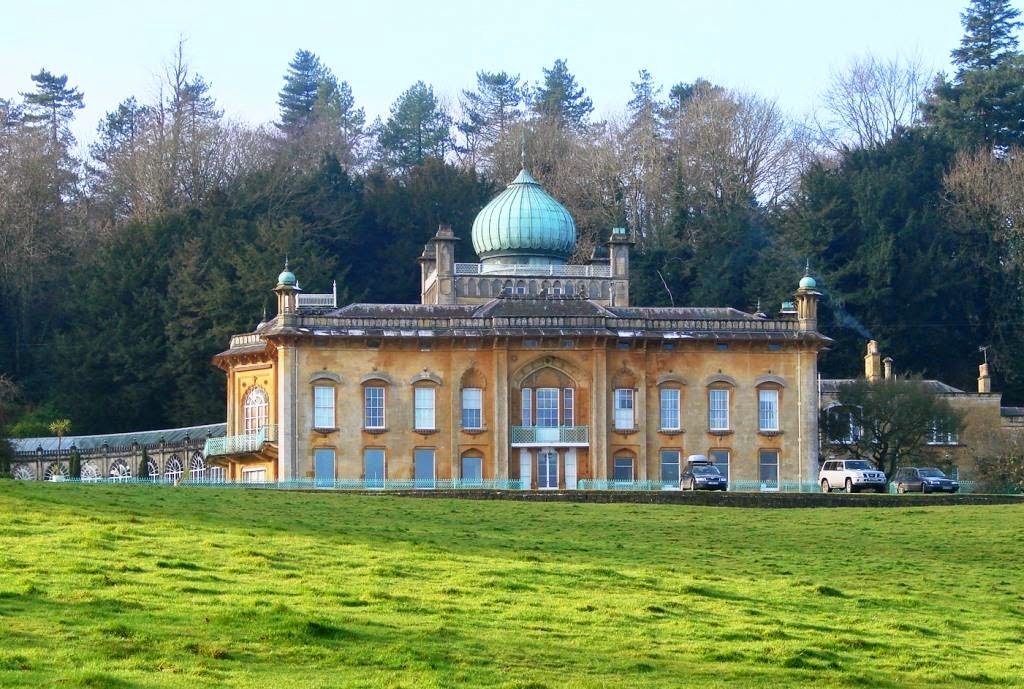
| Sezincote House |
Sezincote House, which lies on the spring line at the eastern side of the North Cotswolds, was designed in the “Indian Style”, by the architect, Samuel Pepys Cockerell in 1805. The gardens were designed by Humphrey Repton, the eminent horticulturalist who is considered the last of the great British landscape gardeners. When the Prince Regent visited the house in 1807 he admired the unique combination of Hindu and Muslim architecture, and it is said that it influenced the design of his exotic oriental retreat, the Brighton Pavilion.
Our ‘Classic Cotswold’ tour passes Sezincote on the routes from Moreton-in-Marsh and Chipping Campden to Stow-on-the-Wold.
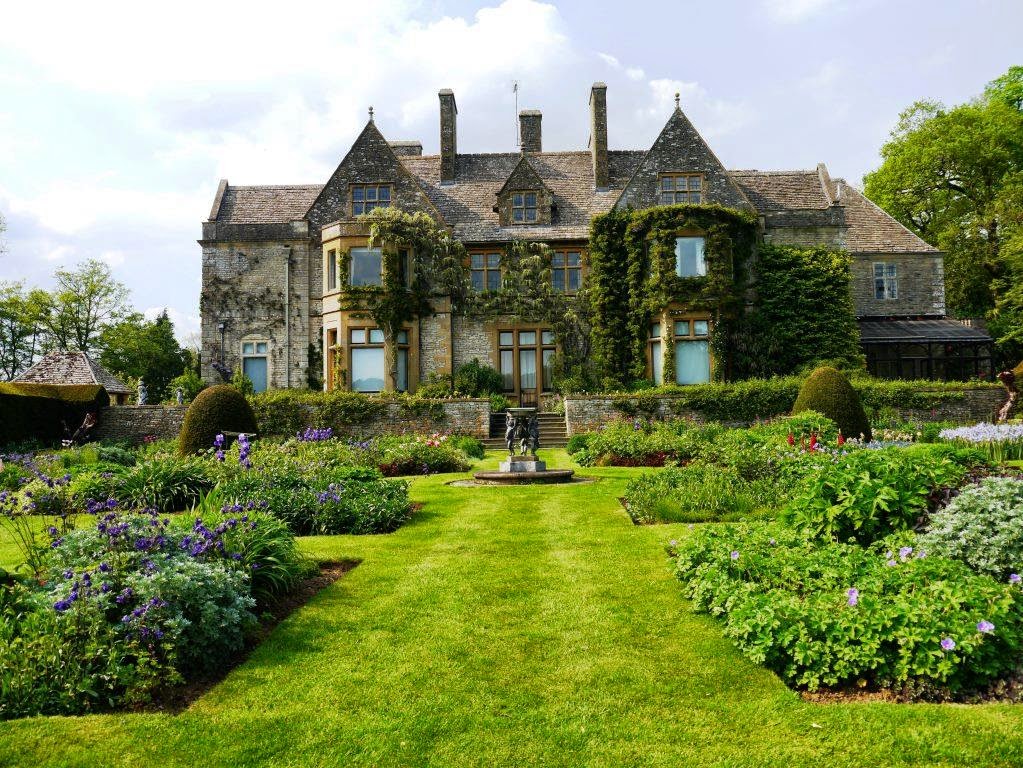
| Abbotswood House |
Abbotswood
is a lovely country house near Stow-on-the-Wold. The estate dates back to 1253, but
the current house was built in 1867. Shortly afterwards it was remodelled and
enlarged in 1902 by Edwin Lutyens, the eminent British architect who adapted traditional
designs for modern day living. Lutyens
also designed the stunning gardens and these are open to the public in April
when the rhododendrons in bloom and in October when the acers are in full
autumn colour and at other times of the year – this photo was taken in
mid-summer. For people with deep
pockets, the house together with the estate and 13 cottages was recently on the
market for £30 million.
On our shortbreak based in Stow-on-the-Wold one of the walks passes through the estate.
Please contact Anne, to find out more or to book a walking holiday.
Happy hiking
Anne
Walk the Landscape
Sunday, 8 February 2015
Visit Ancient Cotswold Churches Steeped In History
On your walking tour through Cotswold towns and villages take the opportunity to visit ancient churches
These historic buildings are steeped
in history and are often the oldest building in the town or village, some
dating back to before the Norman Conquest in 1066.
St Eadburga's church, Broadwayy. This 12th century church is
dedicated to St Eadburgha, the grand-daughter of Alfred the Great. The legend goes that as a child, her father King
Edward, tested her faith and when offered the choice of a gift of jewels or a
bible, she chose the bible and subsequently dedicated her life to God's service. In the 19th century
by a new building closer to the centre of the town, but St Eadburgha’s
continued to be used in the summer, for special candlelit services over
Christmas and for burial services.
Flower arrangement at St Nicholas, Oddington with the 14th century Doom painting on the wall behind.
Painted when most of the population could not read or write, when the
service was in Latin, wall paintings told worshippers bible stories. The Doom or Last Judgement painting shows God
in Heaven with souls on their way to heaven on his right hand side and others
on their way to hell on the left hand side.
The chancel at St Michaels, Buckland, a beautiful small village church
under the Cotswold edge.
St John the Baptist, Cirencester is one of the famous
Cotswold ‘wool churches’. In the middle
ages, the fleeces of many thousands of sheep raised in the Cotswold were
exported into Europe and the wool merchants in area became very rich
indeed. In the 15th century
some of this wealth was used to rebuild parish churches in grand style and the
church as Cirencester is one such.
Happy Hiking
Anne
Tuesday, 20 January 2015
Relax and enjoy wandering through beautiful Cotswold scenery on the network of footpaths at any time of the year
![]() |
![]() |
Happy hiking
Best
Anne
Monday, 22 December 2014
Charles Dickens on Walking
The sum of the whole is this:
Walk and be happy; walk and be healthy.
The best way to lengthen out our days is to walk steadily and with a purpose.Charles Dickens (1812 - 1879)
Sunday, 30 November 2014
Tuesday, 25 November 2014
Sunday, 26 October 2014
A walk through the English Civil War battlefield at Edgehill
The Battle of Edgehill (23rd October 1642) was the first battle in the English Civil War, when Charles I went to war against the English Parliament. They disagreed on matters of religion and on their rights to rule the country. Charles raised his Standard on 22nd August in Nottingham and the first major encounter between the two sides was at Edgehill in the midlands.
The battle lasted around 4 hours and each side had about 15,000 fighting men. 1,500 men were killed and both sides claimed victory in this indecisive battle, the first of many encounters over the next 4 years.
Although there is not much evidence of the battle on the ground today we were able to walk over the Royalist positions on the southern part of the battleground.
A good walk on a cool sunny day.
Best
Anne
Walk The Landscape
The battle lasted around 4 hours and each side had about 15,000 fighting men. 1,500 men were killed and both sides claimed victory in this indecisive battle, the first of many encounters over the next 4 years.
Although there is not much evidence of the battle on the ground today we were able to walk over the Royalist positions on the southern part of the battleground.
Dragoons and musketeers from both sides hid in the hedges on the flanks of the battlefield
The trees on the slope at Edgehill were planted 100 years after the battle
Royalist Pikemen, Musketeers, Cavalry and canon ...
had to make their way down this slope to the battle line
Looking from the battlefield towards Avon Dassett
Ridge and furrow, as seen here, covered the battlefield
Effigy of Captain Henry
Kingsmill in St Peters, Radway, a Royalist officer killed during the battle
Princes Charles and James (our future kings) stayed here in Arlescote
on the night before the battle
The memorial to the Battle of Edgehill
on the B4086, south of Kineton, Warwickshire
A good walk on a cool sunny day.
Best
Anne
Walk The Landscape
Tuesday, 21 October 2014
Malmsbury, a quiet, unspoiled Cotswold town
Went to a festival about the 'Philosophy of Walking' recently and it was my first visit to Malmsbury.
What a lovely little Wiltshire town it is, snuggled to the south-east of the Cotswold Hills. Here are a few pictures of the abbey, the town and the lovely Abbey Gardens.
Happy walking through the Cotswolds in our unusually warm autumn weather.
Anne
Walk the Landscape
What a lovely little Wiltshire town it is, snuggled to the south-east of the Cotswold Hills. Here are a few pictures of the abbey, the town and the lovely Abbey Gardens.
Happy walking through the Cotswolds in our unusually warm autumn weather.
Anne
Walk the Landscape
Wednesday, 4 June 2014
Friday, 23 May 2014
Shakespeare's 450th Birthday Procession
Stratford-upon-Avon, where William Shakespeare was born, is just a few miles from the beautiful town of Chipping Campden in the Cotswolds.
This year on Shakespeare's 450th birthday, 23rd April, the annual procession was supported by hundreds of devotees from local schools, colleges and churches, national and international societies and organisations, as well as individuals, all wearing sprigs of rosemary for remembrance and carrying bouquets of flowers to lay at his grave. It also featured a very large birthday cake.
You can also visit Shakespeare's birthplace and grave at the start of the Shakespeare's Way Trail, or as part of a customised walking tour through Classic Cotswold Towns and along the northern section of the Cotswold Way. Contact us to find out more.
This year on Shakespeare's 450th birthday, 23rd April, the annual procession was supported by hundreds of devotees from local schools, colleges and churches, national and international societies and organisations, as well as individuals, all wearing sprigs of rosemary for remembrance and carrying bouquets of flowers to lay at his grave. It also featured a very large birthday cake.
![]() |
| Band leading the Procession |
![]() |
| The huge birthday cake celebrating Shakespeare's 450th birthday |
![]() |
| A clergyman in the procession wearing a sprig of rosemary for remembrance |
You can also visit Shakespeare's birthplace and grave at the start of the Shakespeare's Way Trail, or as part of a customised walking tour through Classic Cotswold Towns and along the northern section of the Cotswold Way. Contact us to find out more.
Have a great summer of walks
Anne
Wednesday, 21 May 2014
Showers over the Vale of Evesham
Striking views across the Vale of Evesham from the Cotswold Edge when weather fronts pass through.
Happy hiking
Anne
Thursday, 15 May 2014
Thursday, 24 April 2014
Cotswold Way Landmarks: The Devil's Chimney
The Cotswold Way, one of England's most picturesque National Trails
The Devil's Chimney |
One of the most popular legends for the origin of this pillar of rock standing on the Cotswold Edge above Cheltenham, is that it is the home of the devil who resides deep in the ground below.
Angered
by the many churches in the region, it is thought that Old Nick, as the Devil is affectionately known, sat on top of
Leckhampton Hill and hurled stones at pilgrims who were on their way to prayer down in the valley below. However, his wicked ways backfired as the stones turned and hurled
themselves back up the hill, burying him beneath the ground for ever. The
heavy stones piled one upon the other, forming the chimney, locking him in and ensuring he could never escape.
For extra protection, Cheltenham inhabitants would climb to the top of the chimney to leave a
coin as insurance against the Devil's anger and, as some believe, to ensure the privacy of its most infamous inhabitant.
Generations of young people have climbed the rock, including 13 brave souls who hold the unofficial record for the largest number of people to
stand on the top at the same time. Sadly,
owing to the gradual erosion of the landmark, climbing has been prohibited, but it remains one of the iconic sights along the Cotswold Way.
Contact us for hiking holidays along the Cotswold Way and other National Trail in the Heart of England.
Anne
Walk the Landscape
Tuesday, 15 April 2014
Exploring Adlestrop
Wandering through Adlestrop in the spring sunshine.
A magical time of year to go walking.
Best
Anne
Wednesday, 2 April 2014
Cotswold Way Landmarks: Broadway Tower
The Cotswold Way Walking Holiday
enjoy superb rolling countryside with stunning views,
pretty towns and villages and historic sites
![]() |
| Broadway Tower |
This folly in the style of a Norman Keep was built by the Earl of
Coventry for his wife on their Springhill Estate between 1797 and 1800. It is in a prominent position with views over 16 of the original English counties and it can be seen from the family seat in
Worcester. The Earl's wife took great trouble to find the most suitable location. Before it was built she had a flaming beacon lit at the site, then drove around the surrounding area making sure that it could be seen.
The hill was previously called the Beacon and
Barrow Hill and was likely to have been a site for bonfires transmitting important national news
such as the sighting of the Spanish Armada. For a short time in the 19th century the tower was home to William Morris, a founder of the Arts and Crafts Movement and was used a observation point during the Second World War. There is also a Cold War nuclear bunker close by.
Broadway Tower lies at the northern end of the Cotswold Way above the village of Broadway and about 5 miles south of Chipping Campden. It now lies in a country park with a herd of red deer and a café.
Contact us to find out more about walking holidays along all or part of the Cotswold Way
Best
Anne
Friday, 28 March 2014
Cotswold Way Landmarks: The Market Hall, Chipping Campden
The Cotswold Way Walking Holiday
enjoy superb rolling countryside with stunning views
| The Market Hall, Chipping Camdpen
The Market Hall on the High Street, Chipping Campden was built in 1627 by Sir Baptist Hicks, the town's generous benefactor, for a cost of £90.00.
It
was used to shelter the local market traders selling
cheese, butter and poultry and the worn stone floor is a reminder of its regular use through 400 years. On market days wooden pens were also erected around the hall to hold sheep driven down from the hills for sale. Imagine the hustle and bustle of a market day when people from the town and surrounding areas turned out to sell their produce or to buy a fat chicken for dinner or a few sheep for their flock.
Chipping Campden lies at the northern end of the Cotswold Way so this lovely building in honey coloured limestone, is one of the first or last landmarks that walkers will have of the Cotswolds.
Contact us to find out more about walking holidays along all or part of the Cotswold Way
Best
Anne
|
Subscribe to:
Posts (Atom)


.jpg)